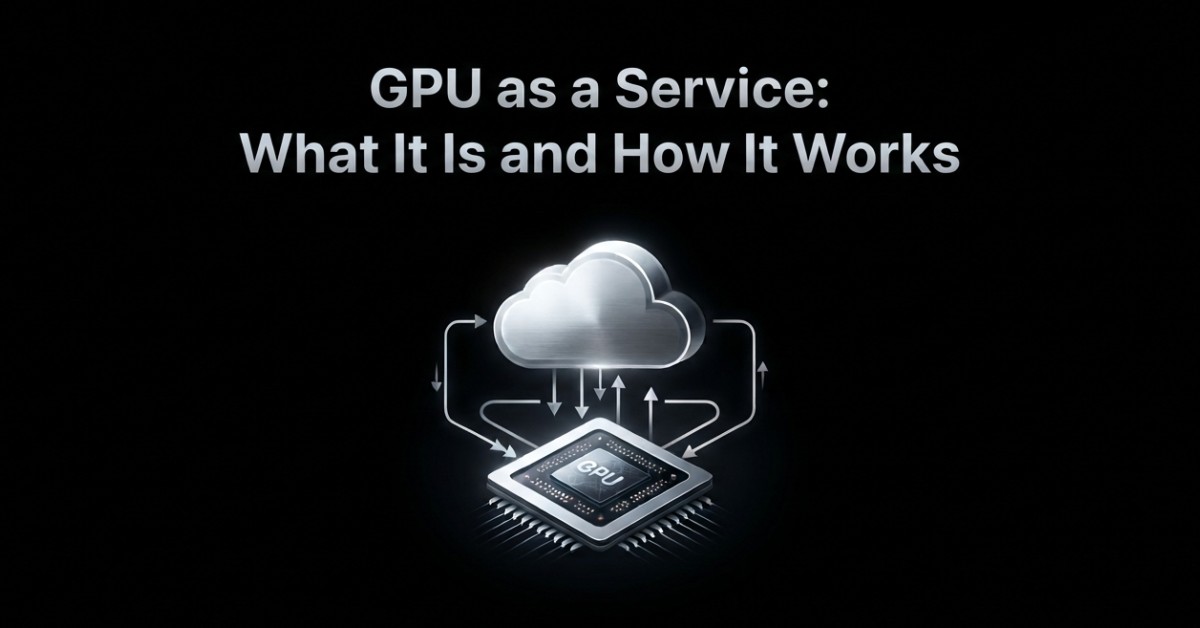


GPU as a Service: What It Is and How It Works
With GPU as a Service, organisations can access top-tier cloud GPUs on demand to power AI applications, graphics rendering, and big data tasks. Eliminating physical hardware dependencies removes electricity and maintenance costs entirely. This gives growing businesses a flexible, budget-friendly way to handle heavy computing tasks.
How On-Demand GPU Computing Operates
High-performance workloads use parallel processing to split heavy tasks into tiny simultaneous calculations. A GPU compute marketplace directly connects software applications to these remote hardware resources instantly.
- Virtual Allocation: Software layers split physical cards into flexible virtual units.
- Instant Provisioning: Developers deploy powerful compute nodes in just a few clicks.
- Resource Distribution: Tasks automatically route to the best available processing nodes.
- Load Balancing: Smart algorithms distribute workloads evenly across active servers to avoid system slowdowns.
- Dynamic Scaling: Systems automatically add or remove compute instances based on current task demands.
By dynamically routing operations across scalable infrastructure, on-demand GPU computing turns complex computational tasks into fast, automated workflows.
Why Rent Instead of Buying Physical Hardware?
Buying advanced hardware requires huge capital investments, custom cooling systems, and constant maintenance. Choosing reliable GPU rental services eliminates physical setup delays and lowers long-term operational risks.
Primary Workloads Powered by Cloud GPUs
Modern machine learning models and high-end graphics applications require dedicated parallel processors. Utilising GPU cloud computing accelerates heavy tasks from days to just a few minutes.
- AI Model Training: Complex neural networks train faster using dedicated parallel processing.
- 3D Rendering: Digital artists render complex visual frames quickly in remote environments.
- Scientific Research: Data teams run large molecular models and financial simulations.
- Autonomous Driving Simulations: Handles sensor data and vision pipelines to train self-driving systems in real time.
- Big Data Analytics: Unlocks deep insights from huge datasets through high-speed queries and automated processing pipelines.
Using scalable cloud GPUs transforms resource-heavy tasks into fast, manageable routines that accelerate time-to-market.
Key Benefits of Cloud GPU Infrastructure
Cloud hardware setups give businesses rapid growth potential without technical hardware bottlenecks. Flexible GPU computing as a service keeps software projects on schedule and within budget.
Selecting the Best Cloud GPU Provider
Selecting the right partner depends on system uptime, hardware variety, and network speed limits. Modern platforms like AITECH Cloud Network help businesses access reliable hardware options for demanding software projects.
- Hardware Choice: Verify access to modern processors fitted for your software stack.
- Network Speed: Look for low latency and high bandwidth capabilities between server regions.
- Data Security: Ensure strong security measures protect your sensitive project files.
Conclusion
Adopting cloud-based processing resources changes how modern businesses manage complex digital workloads. You save money, boost speed, and access cutting-edge technology without managing server rooms.
FAQs
1. What is GPU as a service?
It provides virtual access to cloud-based processors for heavy data tasks. Users rent powerful compute resources over the internet on demand.
2. What types of workloads can businesses run with cloud GPUs?
Companies run AI training, 3D graphics rendering, and complex scientific simulations. These tasks need fast parallel calculations that standard CPUs cannot deliver.
3. Why do companies rent GPU resources instead of buying hardware?
Renting eliminates high upfront costs, power overhead, and ongoing hardware upkeep. Teams can access the newest hardware instantly without buying physical chips.
4. What are the main benefits of using cloud-based GPU infrastructure?
Key benefits include flexible scaling, pay-as-you-go pricing, and reduced maintenance effort. Organisations can expand technical resources without building local data centres.
5. What should businesses consider when choosing a GPU service provider?
Companies should check network speed, pricing structures, hardware choices, and uptime guarantees. Strong data protection and responsive technical support are also essential.


344.svg)