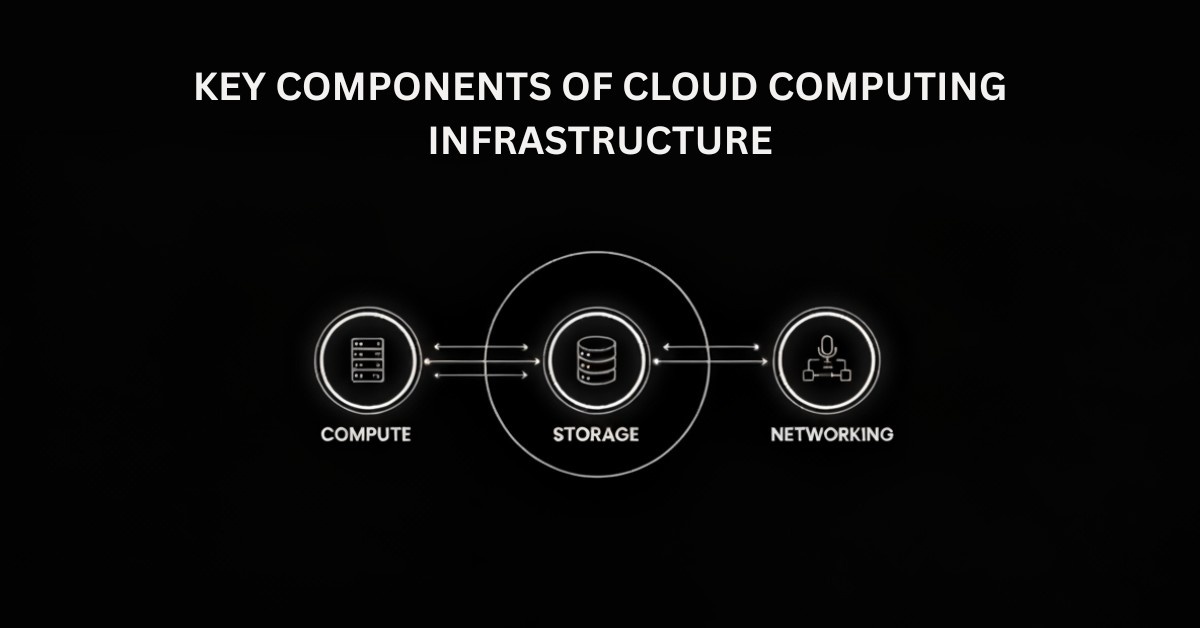


Key Components of Cloud Computing Infrastructure
Cloud computing has changed from just being a place to store information to becoming a big part of the world economy. It gives you easy access to a lot of technical resources online, powered by a mix of real and virtual parts. This setup gives businesses the tools they need to create new ideas without having to worry about looking after physical servers. AITECH Cloud Network optimizes this infrastructure to deliver the high-performance power and efficiency essential for digital growth.
What Is Cloud Computing Infrastructure?
Cloud computing refers to the provision of computing services via the Internet, such as servers, databases, and software. The interface is digital, while the IT architecture that backs it up is vast both physically and virtually.
- Service Delivery: Resources are given to people, such as electricity or water.
- Backbone: Cloud infrastructure is the physical foundation that allows people to access data from anywhere and helps businesses grow worldwide.
- Modern Shift: By 2026, the design of cloud systems and cloud infrastructure architecture will focus more on handling AI tasks and large amounts of data.
Core Components at a Glance
To illustrate how this works, let’s briefly go through the basic components of cloud computing, which are currently contributing to modern-day business.
1. Data Centers: The Physical Foundation
Every digital interaction starts with a physical server housed in a secure facility. Cloud computing infrastructure relies on a global network of remote data centers that provide the raw power for any IT infrastructure and cloud computing infrastructure components.
- Physical Hardware: Contains the bare-metal servers and CPUs that execute every command.
- Reliability: Uses Tier I–IV classifications to guarantee maximum uptime for users.
- 2026 Innovation: Modern centers use advanced liquid cooling to manage high-heat components of cloud computing.
2. Networking: The Connectivity Layer
Networking is like the nervous system for cloud infrastructure architecture. It helps make sure data moves safely. Fast internet connections let users work with resources from far away instantly.
- Speed and Delay: Fast internet connections make cloud computing services work as quickly as using your own computer.
- SDN (Software-Defined Networking): It makes management of network traffic smarter and automated through cloud computing infrastructure components.
- Global Reach: CDNs (Content Delivery Networks) help in storing data close to users to increase speed.
3. Virtualization: The Efficiency Engine
Virtualization is a technology that helps make cloud services cheaper by hiding the details of the physical computers. It lets several users use the same physical IT setup without bothering each other.
- Hypervisors: Applications called hypervisors are what allow one server to manage several virtual machines simultaneously as part of the components of cloud computing.
- Resource Pooling: This makes the most of the benefits of cloud computing technology through effective utilization of all available hardware and AI cloud computing.
- Cloud-Native Apps: To make the migration of applications between various cloud providers easy, employ containers such as Docker as part of cloud computing infrastructure components.
4. Storage: The Data Backbone
Today's cloud infrastructure architecture systems need to handle and keep a large amount of data. Cloud storage is made to keep your data safe by saving it in several places.
- Object Storage: Can grow very large, used for things like pictures and AI data that don't have a specific format within components of cloud computing.
- Block Storage: Offers fast performance with little delay for business databases.
- File Storage: A common way to share folders and work together as a team using cloud computing infrastructure components.
5. AI Cloud Computing: The Intelligence Layer
The latest part of the system is AI cloud computing, which adds smart features to regular setups. It gives the special equipment needed for the complicated calculations used in today's AI.
- GPU/TPU Clusters: These are specialized processors that help execute AI tasks faster than normal CPUs.
- Scalable Training: This helps companies train massive AI models without having to buy any pricey hardware.
- Future Architecture: Built into cloud infrastructure architecture to support real-time automation.
Cloud Infrastructure vs. Traditional IT
Many organizations are migrating away from on-premises IT infrastructure due to the following differences:
Conclusion
Cloud computing is a system that works quickly and efficiently. By using virtualization, global connections, and special AI cloud computers, companies like AITECH Cloud Network help organizations grow quickly while keeping their operations efficient. This compute layer is the key part of the future of digital change.
AITECH Cloud Network powers your growth with high-performance, AI-driven cloud infrastructure designed for maximum speed and scalability.
FAQs
1. What are the key components of cloud computing infrastructure?
These include data centers, networking, virtualization, storage, and special-purpose AI computing hardware.
2. How does cloud infrastructure work?
It leverages virtualization to allocate resources from physical hardware, distributing them to consumers over the internet.
3. What hardware is used in cloud computing?
Hardware entails bare-metal servers, CPUs, fast networking switches, and GPUs or TPUs.
4. What role does networking play in cloud infrastructure?
Networks serve as the link that facilitates fast and secure data transfers from users to data centers.
5. Why is cloud infrastructure important for businesses?
Cloud infrastructure gives businesses access to cutting-edge technology at an affordable cost, eliminating the need to purchase hardware.


344.svg)